Why is my bank account negative when I don't have an overdraft?
It happens at FNB, Capitec, Standard Bank, Absa, Nedbank, TymeBank and Discovery Bank. The cause is almost always sitting on your statement. Here is how to find it, fix it and stop it coming back.
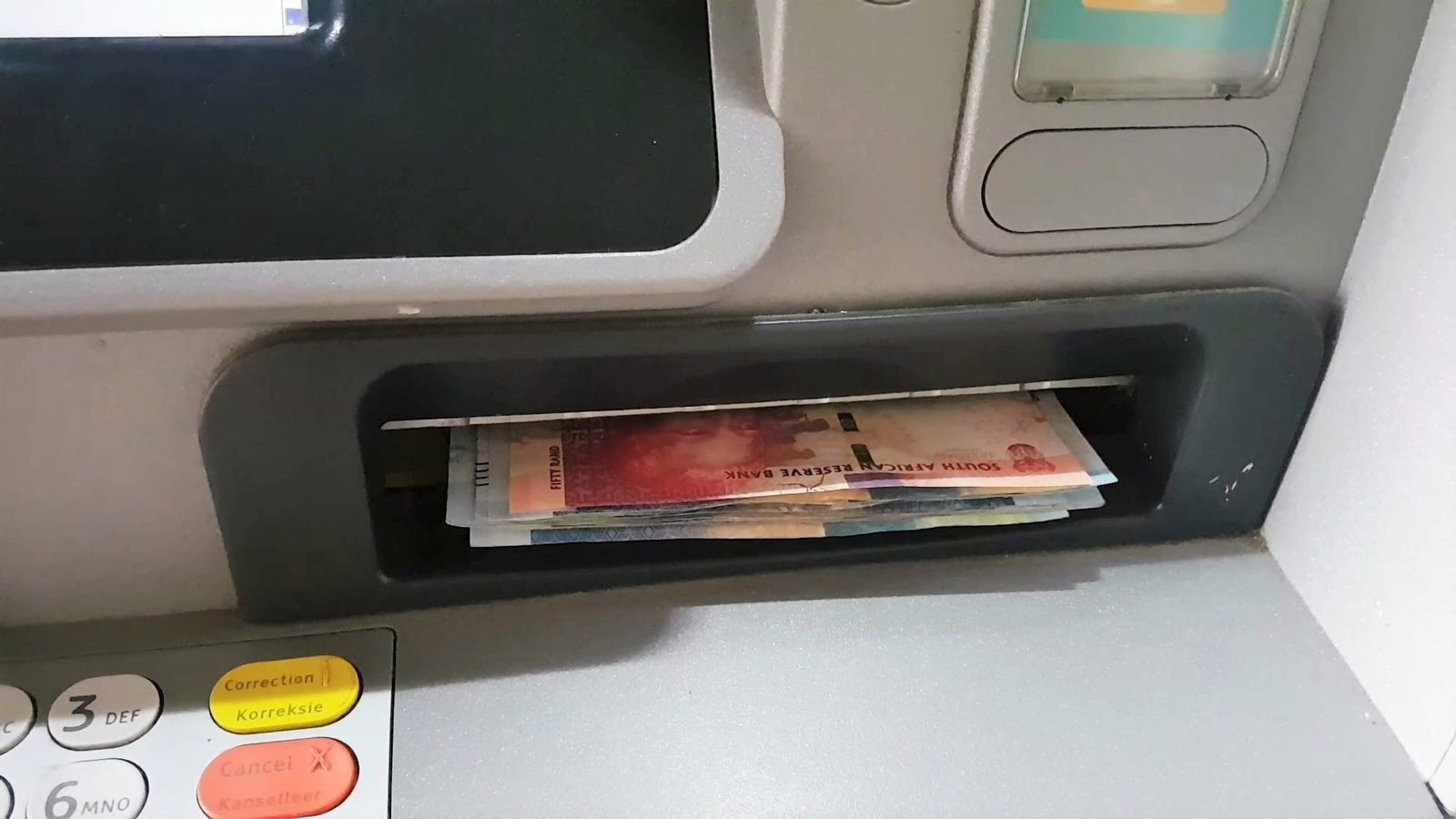
Photo: Tasneem Jaffer / Wikimedia Commons, CC BY 4.0
- Late card payments are the most common cause
- Banks must tell you about fees for an overdrawn account
- The banking ombud helps for free
Your bank account can go negative without an overdraft because some payments reach your bank days after you made them. If the money is already spent by the time they land, that late payment or a bank fee pushes your balance below zero.
This happens at every big bank in South Africa. It is usually fixable, and you have more rights than most people think.
Key facts about a negative balance
- A negative balance usually comes from a late card payment, a debit order or a fee, not from theft.
- Your available balance can look fine while older payments are still on their way.
- Banks must tell you about the fees they charge when your account is overdrawn or a debit order bounces.
- You can complain in your banking app, at a branch or by phone, and the bank may not charge you for it.
- If your bank does not fix it, the National Financial Ombud Scheme helps for free on 0860 800 900.
Can my account go negative without an overdraft?
Yes. An overdraft is a loan the bank agrees to give you. A negative balance without one is something else. It means money went out that was no longer there when the payment finally arrived.
Usually the payment was approved days ago, when you still had money. It just landed late.
Why is my account negative? The usual causes
Late card payments
When you tap your card, the shop asks your bank to put the money on hold. That is a pending transaction. The shop then has to claim the money properly, which is called settlement. Some shops only claim it days later. If the hold drops off first and you spend that money, the late claim sends you into the minus.
In January 2013, about 168,000 Capitec clients had December purchases deducted almost a month late after a problem with Absa-supported card machines, Grocott's Mail reported. Some ended up negative. Capitec said it would not charge them interest. In 2019, FNB blamed wrong balances on "delayed debit card transactions for purchases".
Offline card payments
Some card machines don't check with your bank in real time. Toll gates, flights and some fuel stations can work this way. The payment is stored and sent later, so your bank never gets the chance to decline it. In 2018 SANRAL told the George Herald that bank card payments at a Southern Cape toll plaza were held back after a bank system change, so drivers paid their tolls later.
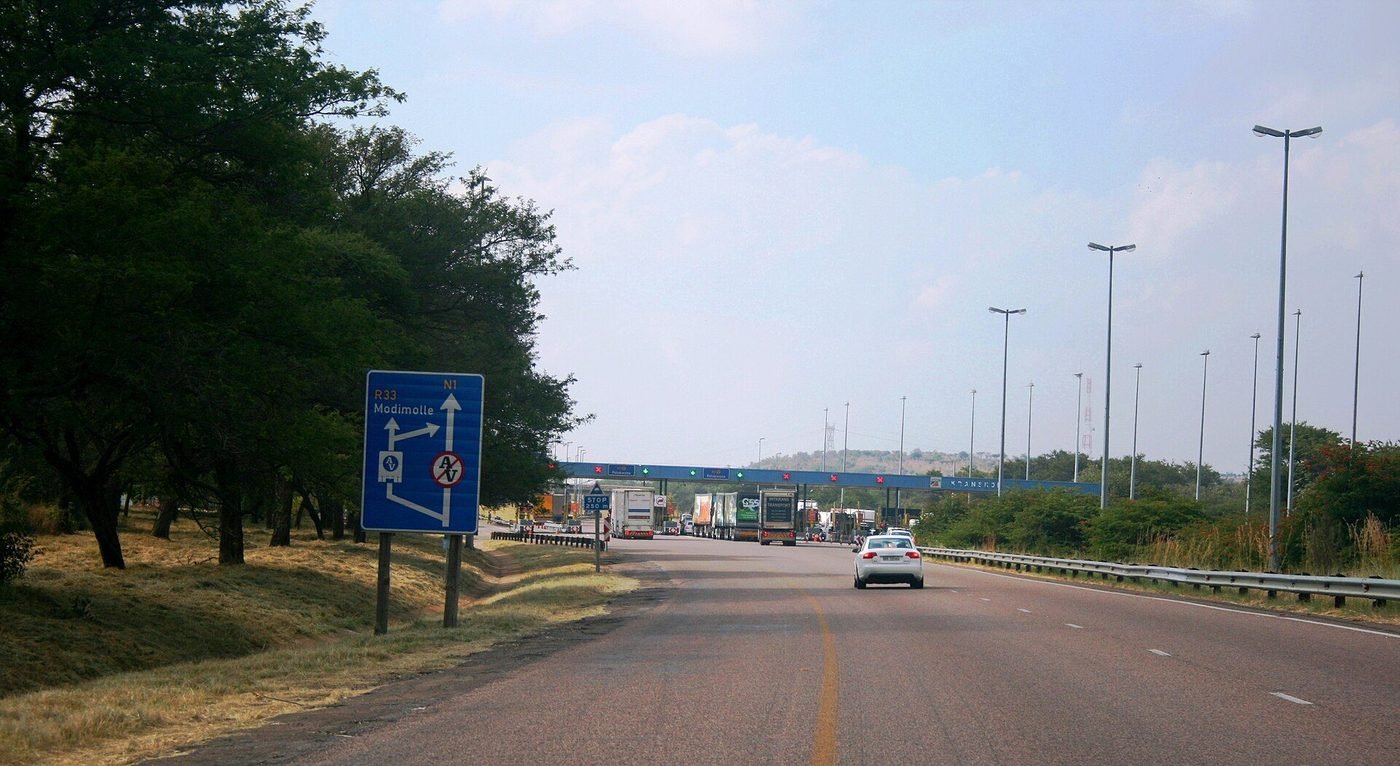
Photo: JMK / Wikimedia Commons, CC BY-SA 4.0
Card holds
Hotels, car rental firms and fuel pumps often hold more than you will spend. The hold shrinks your available balance. When the final amount arrives later, your balance can jump around and catch you out.
Debit orders
Gym, insurance, phone contract. Some banks have let a debit order through when the money wasn't there and then charged a fee. Others send it back unpaid and charge a fee for that. Either way, the fee lands on an empty account.
Monthly fees
Account fees, card fees and SMS notification fees come off on a fixed date. If your balance is R0 that day, they take you below zero.
Foreign purchases
Pay in dollars or euros and your bank holds an estimate in rand. The real amount comes through at the exchange rate on the day it settles. If the rand weakened in between, you pay a little more than you saw.
Reversals that bounce back
A refund or a disputed amount that the bank credits while it checks can be taken out again later. If you spent it, you land in the minus.
Why is my FNB, Capitec or Absa account negative?
The causes above are the same at every bank. What differs is how each bank handles the gap.
In 2023, personal finance writer Maya Fisher-French reported that some banks charged an "honouring fee" for letting a payment through without enough money. She reported that Nedbank declines those payments instead. She also reported that the National Credit Regulator said an honouring fee would not be allowed under the National Credit Act.
If you bank with FNB, you are far from alone. This week FNB customers with no overdraft said their accounts keep sliding into the minus, even after the bank told them it was sorted.
How do I find out what made my account negative?
Download your full statement for the last two months. The app balance alone won't show you enough.
Then look for these clues.
- Two dates on one purchase. A payment dated the 3rd that only went off on the 9th is a late settlement.
- Fee lines. Look for words like honouring fee, unpaid debit order fee, admin fee or notification fee.
- Foreign amounts. Compare the rand amount you saw at the till with the amount that settled.
- Debit orders you don't recognise. Write down the company name and the date.
Your list of mystery lines is your complaint.
How do I dispute a negative balance?
Step 1 is to ask your bank. Use the chat in your app, the call centre or a branch. Ask what each line on your list is. Always get a reference number.
Step 2 is for debit orders. The Code of Banking Practice says you must contact the company that collects the debit order before your bank can help you stop or dispute it.
Step 3 is to put it in writing. Send an email with your reference number, each date and amount, and what you want, for example a fee reversed.
The Code, which applies from 1 July 2025, says your bank must acknowledge your complaint, tell you who is handling it and how long it will take, and keep you updated. It may not charge you for complaining. When it gives its final answer, it must tell you how to take things further.

Photo: Husskeyy / Wikimedia Commons, CC BY-SA 4.0
When should I go to the banking ombud?
Go to the ombud when your bank's final answer doesn't fix it, or when the bank stops answering.
The National Financial Ombud Scheme, called the NFO, took over from the old banking ombudsman in 2024. It is free. You can call 0860 800 900, send a WhatsApp to 066 473 0157, email info@nfosa.co.za or fill in the form on nfosa.co.za. The ombud has time limits, so complain while the dates are still fresh.
It works. In 2025 the NFO handled 12,461 banking complaints and recovered just over R53 million for banking customers. Its decisions can be made an order of court.
Do I have to pay back a negative balance?
Usually yes, if the payments were really yours. You spent that money, it just arrived late.
But you don't have to accept fees that were charged wrongly or a payment you never made. Dispute those first. Pay in the part you agree with, so more fees don't pile up while you wait.
Can a bank make me pay a negative balance before I close my account?
Most banks want the account at zero before they close it. The Code says your bank must not put unreasonable barriers in your way and must tell you the balance before closing. Ask for that closing balance in writing.
Does a negative balance affect my credit score?
A short dip below zero that you fix fast is unlikely to hurt you. Leaving it is risky.
Since 1 March 2025, banks have to report overdrafts that are more than R500 in the red for 30 days, according to FinFix chief executive Chris Coetzee. If an unpaid balance is handed to a debt collector, it can end up as a negative listing at a credit bureau. You must get a written warning first, so never ignore letters about an old account.
How do I stop my account going negative again?
- Turn on app notifications for every payment. In-app alerts are often cheaper than SMS alerts.
- Keep a small buffer. A few hundred rand that you never touch soaks up late payments and fees.
- Watch your pending payments, not just your available balance. A hold dropping off does not mean the shop won't claim later.
- Cancel old debit orders with the company itself, then check your next statement.
- Use your app's card controls. Most banks let you switch off online, overseas or tap payments, and you can ask whether offline payments can be blocked on your card.
What to do today
Open your statement and circle every line you don't recognise. Send one message to your bank with that list and save the reference number.
A minus balance feels like a mystery. You now know it has a cause, that the cause is on paper, and that a free ombud stands behind you if the bank won't listen. That reference number starts your paper trail, and a paper trail is what the bank and the ombud work from.
Sources: Banking Association South Africa, Code of Banking Practice (from 1 July 2025) · National Financial Ombud Scheme, FAQs · National Financial Ombud Scheme, 2025 results · Grocott's Mail, Capitec and Absa late card payments · The Herald, FNB delayed card transactions 2019 · George Herald, SANRAL on delayed toll card payments · Maya on Money, honouring fees · Insurance Biz, overdrafts on credit reports · Daily Dispatch, NFO opens · National Financial Ombud Scheme
How does this make you feel?
The week's biggest stories, every Monday
One email. The stories everyone will be talking about, before they do.
Free. One email a week. Unsubscribe anytime.Keep reading
 ExplainedWhat is pneumonic plague? The facts, explained simply
 PoliticsThe Cape independence push Pretoria can't ignore
 WorldA super El Niño is building and the ocean is acting strange