Stop eating and your body starts eating itself. One man won a Nobel Prize for proving it
Yoshinori Ohsumi starved yeast cells and watched them eat themselves. Now millions of people skip breakfast hoping to switch on the same cleanup crew. Here is what the science says.
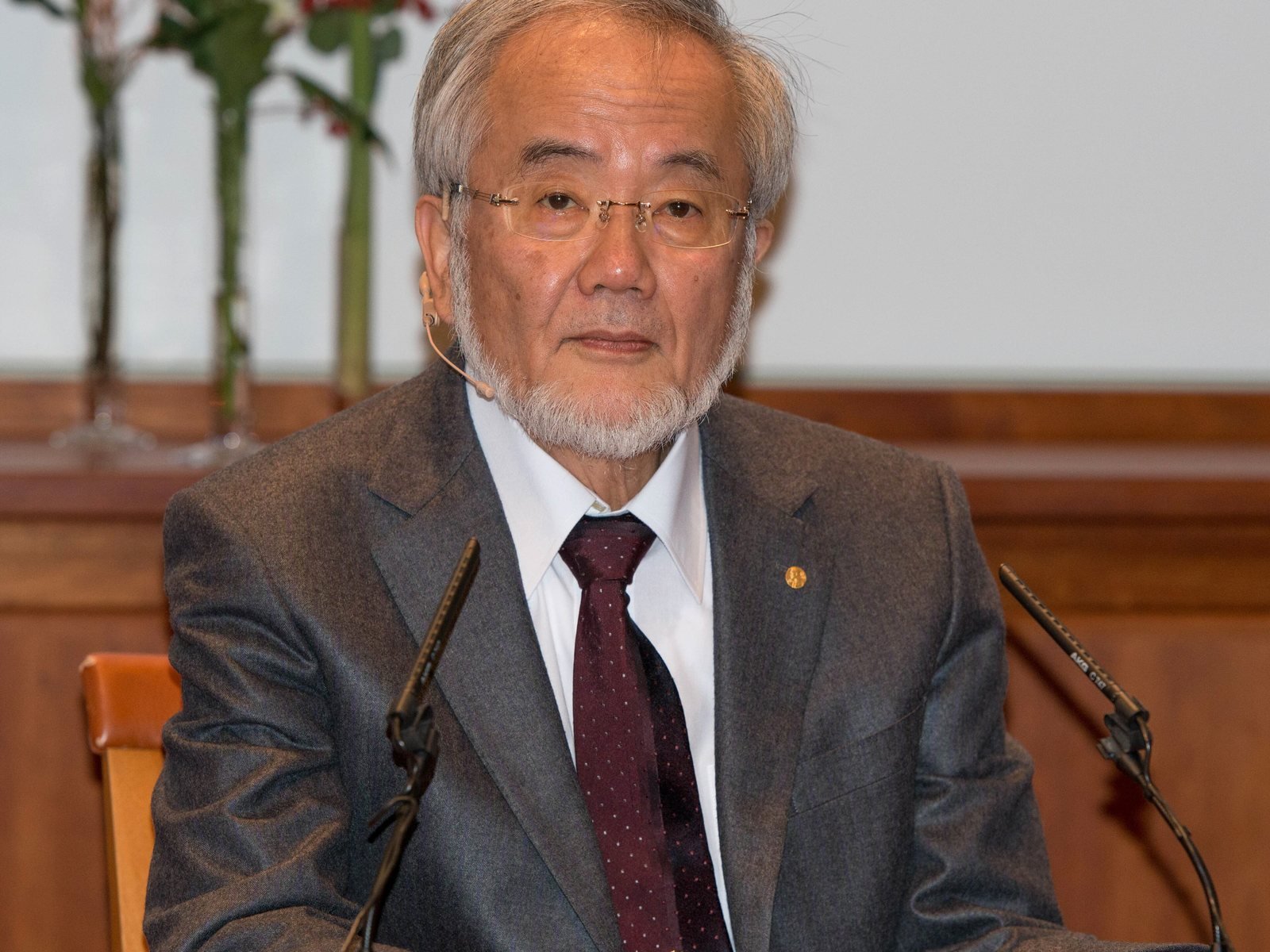
Photo: Bengt Nyman / Wikimedia Commons, CC BY 2.0
- The Nobel discovery started with starving baker's yeast
- Your cells have a built-in recycling bin for broken parts
- Nobody agrees on how many hours of fasting it takes
Right now, inside you, tiny bubbles are forming around broken bits of your cells. Worn-out proteins, tired power stations, even bacteria that sneaked in.
The bubbles carry the junk to a kind of cellular stomach. There it gets chopped up and turned into fresh building blocks.
Stop eating for a while, and this process speeds up. Your body starts living off its own garbage.
It sounds like science fiction. It earned a Japanese biologist the 2016 Nobel Prize in Physiology or Medicine.
What is autophagy?
The word comes from Greek. "Auto" means self. "Phagein" means to eat. Put them together and you get "self-eating".
Scientists first spotted it in the 1960s. They saw cells wrapping their own parts in little sacks and sending them off to be destroyed. Belgian scientist Christian de Duve gave it the name.
But for decades nobody knew how it worked. The process was too small and too fast to study. That changed when one stubborn researcher turned to a very ordinary ingredient.
This week his discovery went viral all over again, racking up 1.2 million views. The comments ranged from "one meal a day" to "cannibalism for the win".
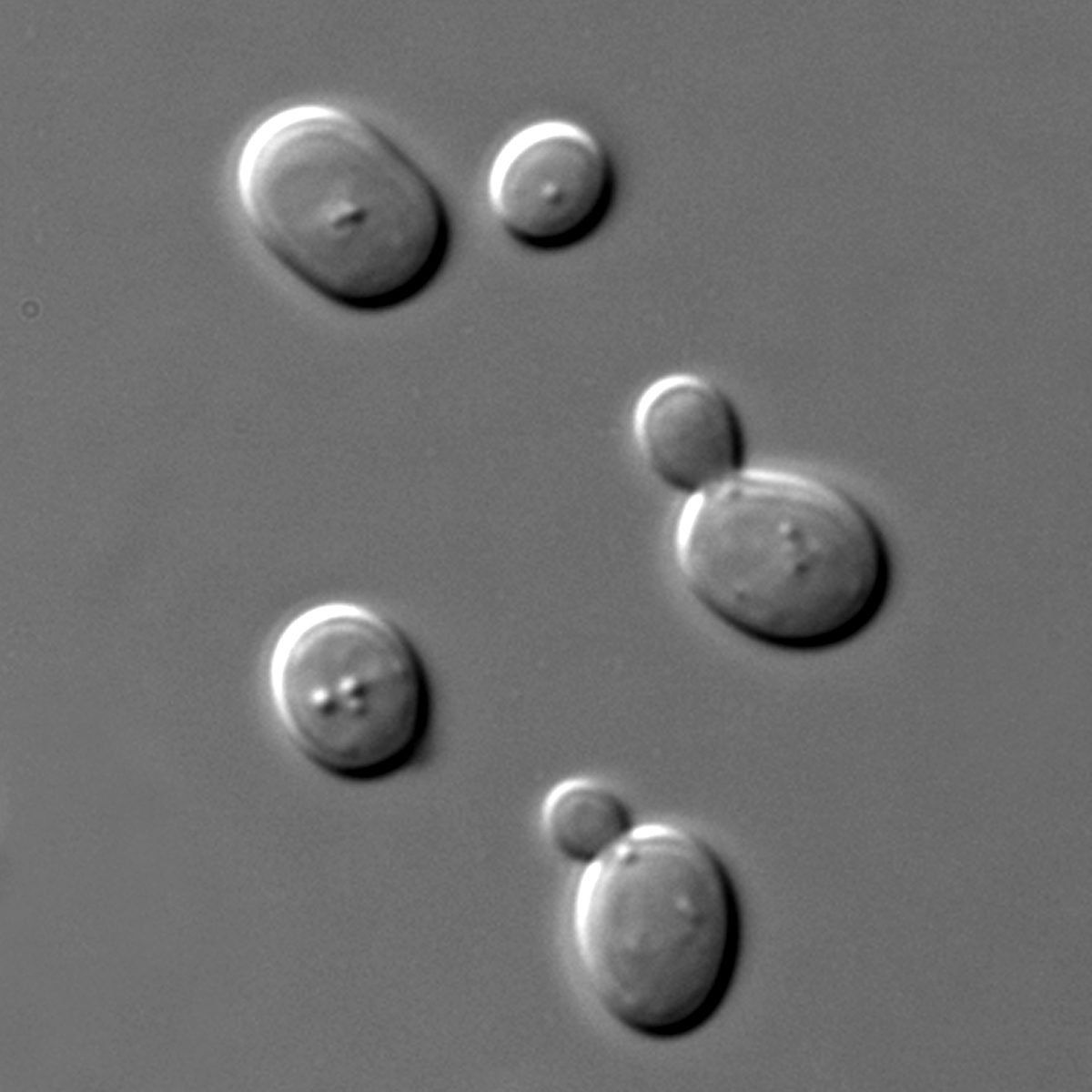
Photo: Masur / Wikimedia Commons, Public domain
What did Yoshinori Ohsumi discover?
Ohsumi was born in Fukuoka, Japan, in 1945. He opened his own lab in Tokyo in 1988 and chose to study baker's yeast, the same stuff used to make bread rise.
There was one problem. Yeast cells are tiny. He wasn't even sure self-eating happened in them at all.
So he tried a clever trick. He bred yeast that could not digest anything in its recycling bin. Then he starved them.
If the cells were eating themselves, the junk should pile up where he could see it.
It did. Within hours, the bins were stuffed with undigested bubbles, according to the Nobel committee. Self-eating was real in yeast, and now he could hunt for the genes that ran it.
He went through thousands of mutant yeast cells and found 15 genes that autophagy can't work without. He published the first results in 1992. Later work showed almost the same machinery runs inside human cells.
In October 2016, at age 71, he won the Nobel Prize alone. The prize was worth more than $930,000.
Does your body really eat itself when you fast?
In a way, yes. But it eats the right things.
Your cells have a growth switch called mTOR. When food is around, it stays on. It tells the cell to build, build, build, and it keeps the cleanup crew quiet.
When food runs low, a fuel sensor called AMPK notices. It turns the growth switch down and wakes the cleanup crew. The cell starts breaking down its own damaged parts for energy.
The Nobel committee says this cleanup helps cells survive hunger and fight infections. It calls it a quality control system that is critical for fighting the effects of ageing.
Mark Mattson is a neuroscientist at Johns Hopkins who has studied fasting for 25 years. He says our bodies evolved to go many hours, even days, without food. Our hunter-gatherer ancestors did it all the time.
How long do you have to fast for autophagy?
This is the question everyone asks. One reader put it bluntly. How long do I have to starve to eat all the bad stuff?
Nobody has pinned it down in people yet.
Most hard numbers come from animals. In a 2010 study, mice that fasted for 24 or 48 hours showed what researchers called "profound" autophagy in their brain cells. But mice burn through energy far faster than we do.
Human cells are much harder to check. You can't see autophagy in a blood test at home. Scientists need tissue samples and special markers.
"We just don't know the hours of fasting," nutrition professor Krista Varady of the University of Illinois Chicago told Inverse.
That hasn't stopped the internet from guessing. Online you will find 16 hours, 24 hours, 48 hours. People on 16:8 plans and one meal a day swear they feel the difference, the same way some swear luck is a habit you can train.
What Mattson's research does show is a "metabolic switch". After enough hours without food, your body runs out of quick sugar fuel and starts burning fat. Most people eating three meals plus snacks never get there.
Does fasting kill cancer cells?
The cancer stories are the wildest ones.
Online, one person said they had heard of people who beat cancer by fasting for months. Stories like this spread fast in health groups, and some lean on Ohsumi's name. His own work was on yeast, not tumours.
Still, real labs are asking the question. At the University of Southern California, Valter Longo's team gave mice a fasting-like diet along with chemotherapy. Their tumours shrank to half the size of tumours in mice that got chemo alone.
A small pilot trial in 18 people on chemo found a three-day fasting-like diet was safe and doable.
Could hunger be a weapon against cancer? Researchers are still chasing that one. Any long fast, especially with an illness, belongs under a doctor's eye.
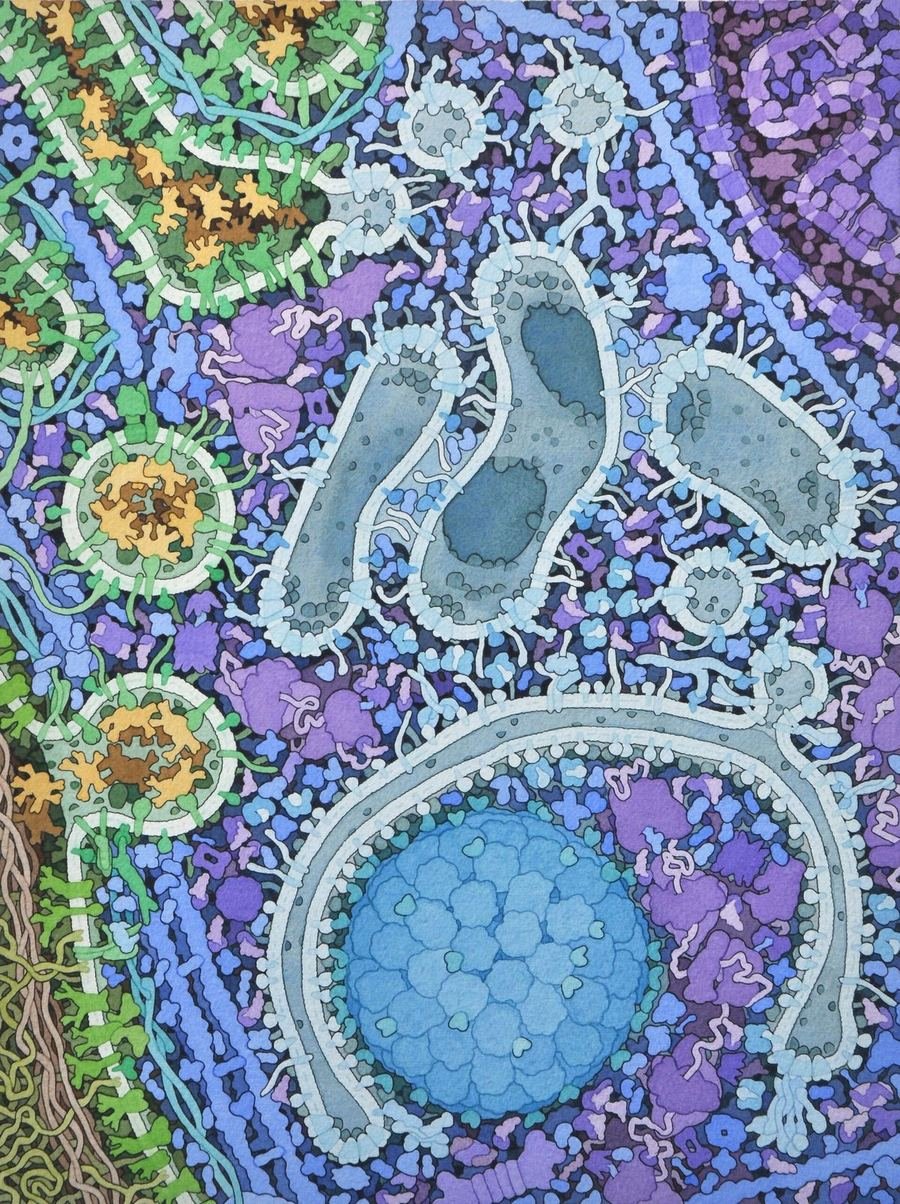
Photo: David S. Goodsell / Wikimedia Commons, CC BY-SA 4.0
Can fasting help with ageing, Alzheimer's and Parkinson's?
The Nobel committee linked broken autophagy to Parkinson's disease, type 2 diabetes and other illnesses that show up as we get older. Faults in autophagy genes can also cause disease on their own.
Mattson's big 2019 review in the New England Journal of Medicine found that intermittent fasting improves blood sugar control, lowers inflammation and helps cells handle stress. He called it something that "could be part of a healthy lifestyle".
So does hunger make us healthier? Many readers clearly think so.
Wasn't fasting supposed to be bad for you?
"Remember when science said fasting was really bad for you," one person wrote.
The debate is still alive. In 2024 a study of more than 20,000 US adults linked eating in a window of under eight hours a day to a 91 percent higher risk of dying from heart disease. The American Heart Association stressed the results were early and only showed a link, not a cause.
Mattson also warns that the first weeks can be rough. Hunger and grumpiness are common and usually fade after two weeks to a month.
Another reader, from India, said the country had always known this. Hindu fasts like Ekadashi come around twice a month, and Ayurveda has used fasting for a very long time. Science, they said, is just catching up.
That is not far off. Fasting was around long before anyone had a microscope. Even coffee drinkers have their own version of this story, as research on the daily cup and slower ageing shows.
Photo: Stock Catalog / Wikimedia Commons, CC BY 2.0
Why does a Nobel Prize for yeast matter to you?
Because the same machinery Ohsumi found in a bread ingredient is running in every cell you own.
It recycles worn-out parts and clears out invaders. It was built for the times when food runs short, and for most of human history that was often.
You don't need a lab to use it. Every night while you sleep, you are already fasting. Some people simply stretch that window a little longer.
A man starved some yeast in a Tokyo lab and found a cleanup crew living inside all of us. It has been there all along, waiting for a quiet moment to get to work.
Sources: Original post on X · Nobel Prize press release, 2016 · Science News · de Cabo and Mattson, New England Journal of Medicine, 2019 · Futurity / Johns Hopkins · Johns Hopkins Medicine · Alirezaei et al., Autophagy, 2010 · Inverse · USC News · American Heart Association · Gulf News
The week's biggest stories, every Monday
One email. The stories everyone will be talking about, before they do.
Free. One email a week. Unsubscribe anytime.Keep reading
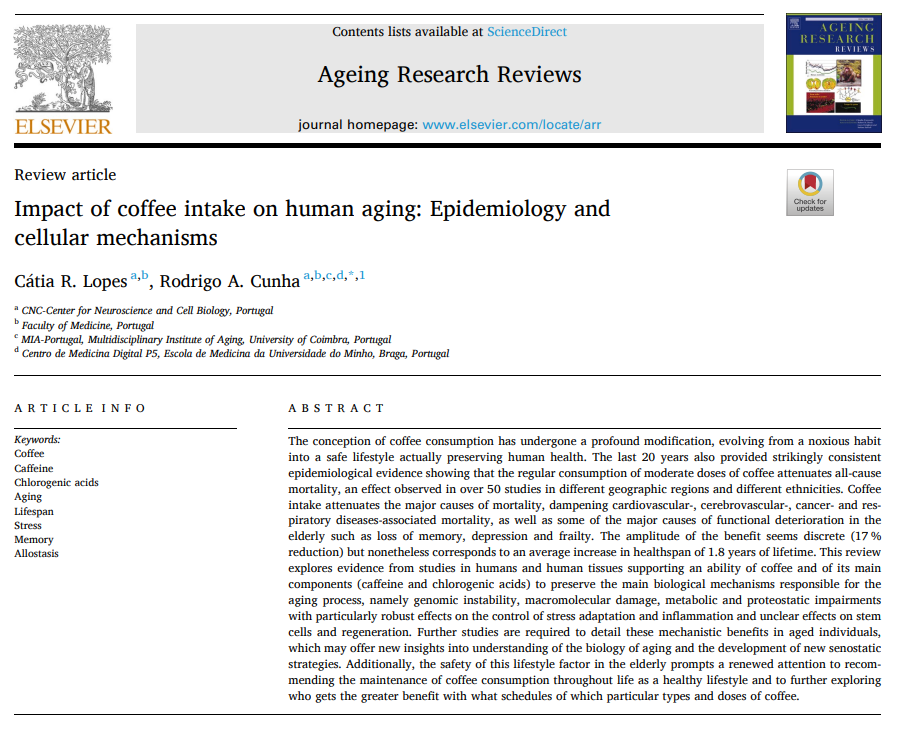 FoodYour coffee may be slowing down how fast you age
 ViralA $40 million lottery ticket is still unclaimed, and time is running out
 WorldInside the Siberian plague lab at the centre of Russia's scare