Should you be worried about the plague in Russia? Straight answers to what everyone is asking
A young lab worker is dead, nearly 200 people were put under observation and Moscow won't use the word plague. Microbiologists answer the questions people keep typing into Google.
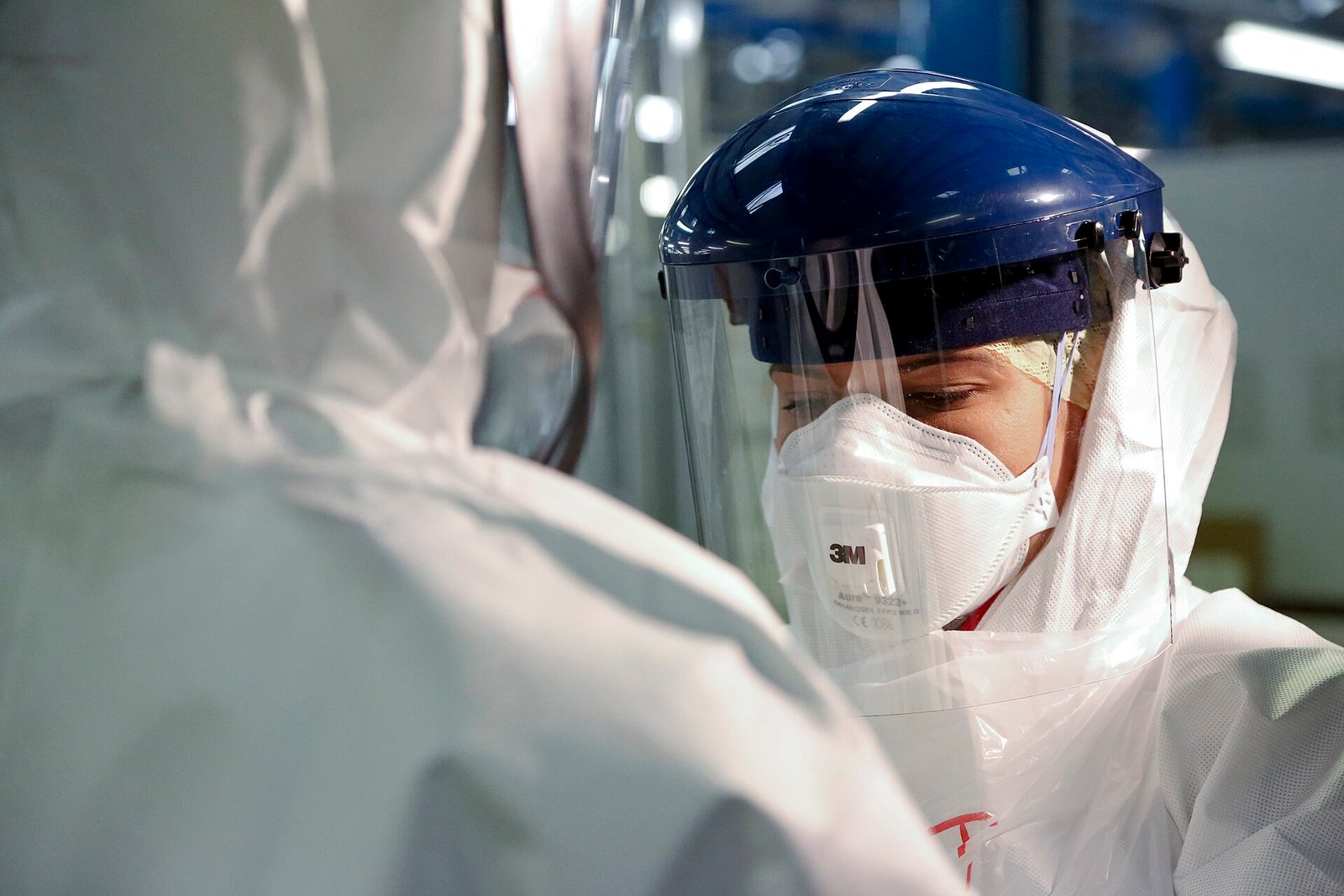
Photo: DFID - UK Department for International Development / Wikimedia Commons, CC BY 2.0
- A Siberian hospital handed a pregnant woman a plague checklist
- Four of Russia's neighbours added quarantine checks at their borders
- One cheap treatment decides how this story ends
At a maternity clinic in Irkutsk this week, a woman 40 weeks pregnant was handed a form before she could see her doctor. Its title was "Checklist for Suspected Highly Dangerous Infectious Disease Plague".
Nobody said the word out loud. Staff told her only that a "new virus" was going around, CNN reported.
Moscow's line is that there is no plague. Darya Shipilova, a 28-year-old technician at the city's anti-plague institute, died on 2 October of what Russia calls "pneumonia of unknown aetiology". Yet nearly 200 people who had been near her were put under medical observation, and hospitals across the region shut out visitors.
So people are asking the obvious. How serious is this? Do we need to worry?
Is there a plague outbreak in Russia?
Not a confirmed one. No published test has shown plague in Shipilova or in anyone around her.
Russia told the World Health Organization that no plague case had been registered in the Irkutsk region and that no high-threat germs turned up among her contacts. Their tests found two cases of Covid and two of rhinovirus, the common cold bug.
The doubt comes from what officials did. The head of neighbouring Buryatia wrote that she died of plague, then edited it to "possibly". More than 60 institute staff were sealed inside their building. A local outlet reported she broke a test tube of plague bacteria, which officials have not confirmed. Our first report on the lab death has the full timeline.
One part is still developing. WHO chief Tedros Adhanom Ghebreyesus has asked Russia about media reports of a second employee with pneumonia of undetermined cause. People online claim at least two are dead. No authority has confirmed a second death.
Is this going to be another Covid?
No, and the scientists tracking the case agree on that.
"It's nothing like the Covid-19 pandemic," Tulane University microbiologist Lisa Morici told NBC News. Covid floats through the air well beyond six feet. Plague droplets don't.
Virologist Angela Rasmussen told CNN that pneumonic plague is deadly but not very transmissible. You need a high dose of bacteria to get sick.
The bigger difference is the germ. Covid was a new virus nobody had a drug for. Plague is a bacterium doctors have known for centuries, and ordinary antibiotics kill it.
How do you catch pneumonic plague?
Mostly by being face to face with someone who is already coughing.
Plague comes from a bacterium called Yersinia pestis, which lives in wild rodents and their fleas. A flea bite usually causes bubonic plague, the kind with swollen glands, and that form doesn't pass between people.
Pneumonic plague is the form that reaches the lungs, and the only one that spreads person to person. The droplets travel maybe three to six feet, says Dave Wagner of Northern Arizona University. "They drop to the ground pretty quickly."
Vanderbilt's William Schaffner says it reaches face-to-face contacts, not people across a room. The CDC says the last documented case of plague passing from one person to another in the US was in 1924. Recent American cases came from sick cats.
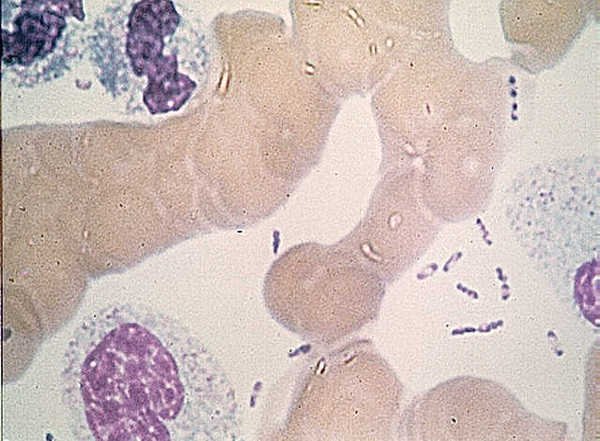
Photo: U.S. Centers for Disease Control and Prevention / Wikimedia Commons, Public domain
What are the symptoms of plague?
It starts like a bad flu, then the lungs go downhill fast.
The CDC lists fever, headache and weakness, followed by "a rapidly developing pneumonia" with shortness of breath, chest pain, a cough and sometimes bloody or watery mucus. Chills, body aches, nausea and vomiting are common across all forms of plague.
The timing gives it away. Symptoms usually appear one to two days after exposure, Wagner says. That short window lets doctors check the contacts of a suspected case and clear them quickly.
How fatal is pneumonic plague, and is there a cure?
Untreated, it is about as deadly as a disease gets. Treated early, most people survive.
Microbiologist Thomas Jeffries of Western Sydney University writes that pneumonic plague kills up to 100% of people who get no treatment. Even bubonic plague kills 30% to 60% of untreated patients.
The cure is a 10 to 14 day course of antibiotics, as pills or through a drip, started soon after infection. Wagner says patients need it within 48 hours of their first symptoms.
Some resistant strains have turned up in the wild since 1995, Jeffries adds, and Soviet scientists engineered resistant plague in the 1980s. That history feeds the bioweapon talk online, and so does Moscow's record of hiding lab accidents. Still, he says there is no evidence the strain in this case can't be treated.
Can it spread to other countries?
It is very unlikely, and the WHO puts that in writing.
The agency rates the risk as moderate to low for Irkutsk, low for Russia as a whole and very low for Europe. The CDC says there is "no indication of a broader threat to the United States".
Some of Russia's neighbours are taking precautions anyway. Kazakhstan, Kyrgyzstan, Uzbekistan and Tajikistan have added quarantine checks at border crossings. China hasn't, and no flights from Irkutsk to China have been cancelled, according to Flightradar24 data reviewed by CNN.
Plague isn't new to Siberia either. It lives naturally in marmots and ground squirrels there, which is why the Irkutsk plague institute exists in the first place.
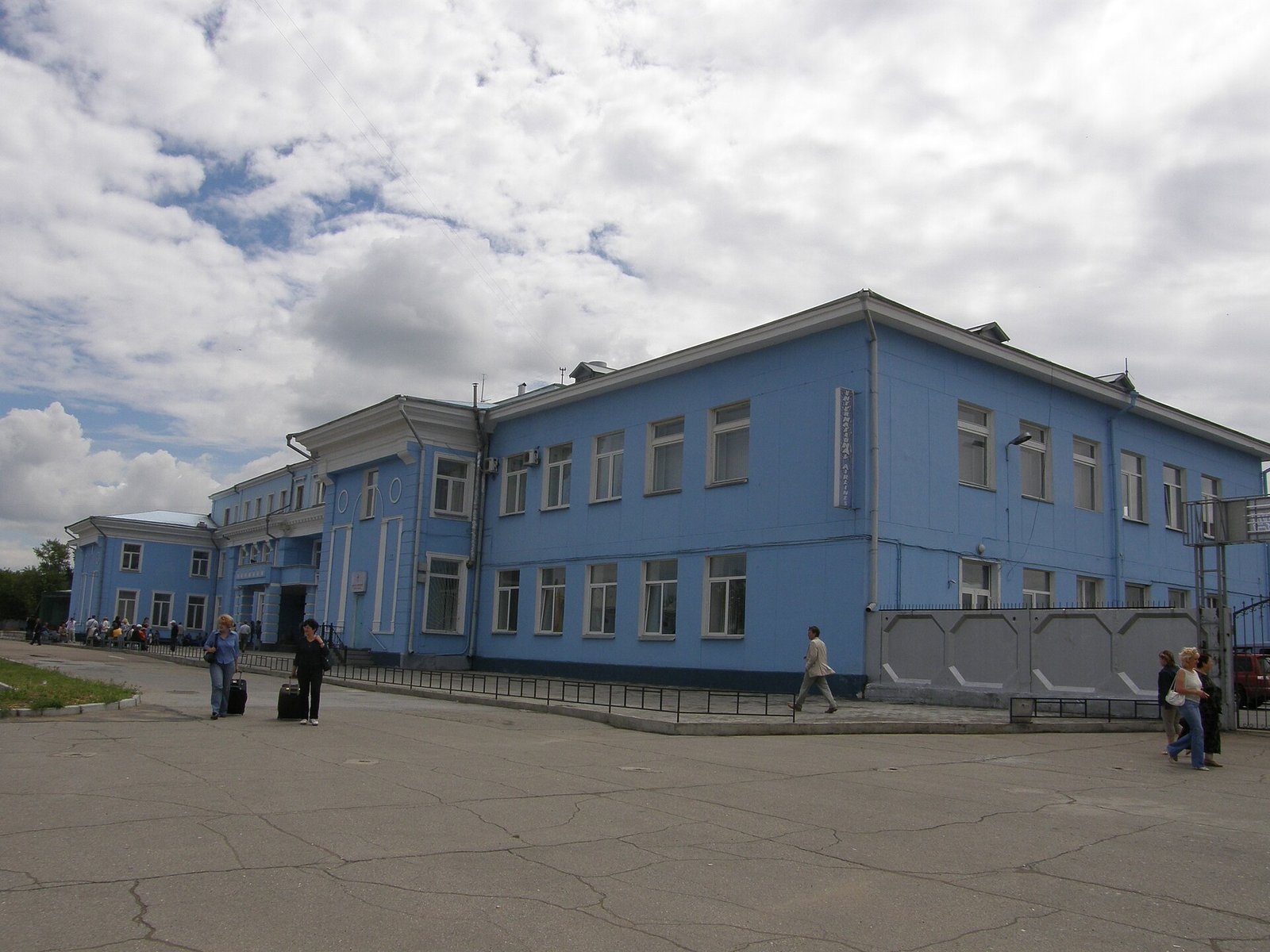
Photo: E-note / Wikimedia Commons, Public domain
Could it become a pandemic?
Jeffries sees little evidence of that, and the record backs him.
There has been only one documented major outbreak of pneumonic plague, in China in the 1910s, he writes. The Black Death struck centuries before antibiotics, in crowded towns full of rats.
Plague is still a thing in 2026. There are 1,000 to 2,000 cases worldwide each year, and the US sees about seven. In July 2025 an Arizona man died of pneumonic plague after contact with sick cats. None of it turned into a pandemic.
University of Reading virologist Ian Jones calls Irkutsk "a rare lab accident" that is "unlikely to go much further", because her contacts are known and can be treated. Some people online say they would worry more about Ebola, which has just reached Kenya.
Should I cancel my travel plans?
Not unless you were heading to the Irkutsk region itself.
The WHO's risk statement contains no travel or trade restrictions. US Secretary of State Marco Rubio pointed out there is "very limited travel between the US and Russia" anyway, and called the case cause for focus, not alarm.
If you are going to Siberia, the usual plague advice applies. Keep away from wild rodents and dead animals, and see a doctor quickly if a high fever and cough hit within a few days.
So, do we need to worry?
For almost everyone reading this, no.
To catch pneumonic plague you would need to be within a few feet of someone coughing it up. Symptoms arrive within days, so contacts are found fast. And a standard course of antibiotics cures it when it starts early.
Russia still hasn't published the lab results behind its denial, and Trump says he will raise it with Putin. The sign that would change the picture is new cases outside the quarantine zone, and so far none has been confirmed.
Vanderbilt infectious disease expert William Schaffner puts it plainly. "We will not turn 2026 into the Middle Ages," he says. "That will not happen."
Sources: CNN, first report, 4 October 2026 · CNN · The Conversation · NBC News · Al Jazeera · The Guardian · CNBC · WHO via UN Geneva
The week's biggest stories, every Monday
One email. The stories everyone will be talking about, before they do.
Free. One email a week. Unsubscribe anytime.Keep reading
 WorldA Siberian plague lab worker died, and Russia won't call it plague
 WorldInside the Siberian plague lab at the centre of Russia's scare
 WorldMoscow once blamed bad meat for an anthrax leak. Now it says pneumonia