A young lab worker died inside a Siberian plague institute, and Russia won't call it plague
Darya Shipilova worked with some of the world's deadliest bacteria. Russia says she died of pneumonia of unknown origin. Here is what is confirmed, what is rumour, and how worried anyone should be.
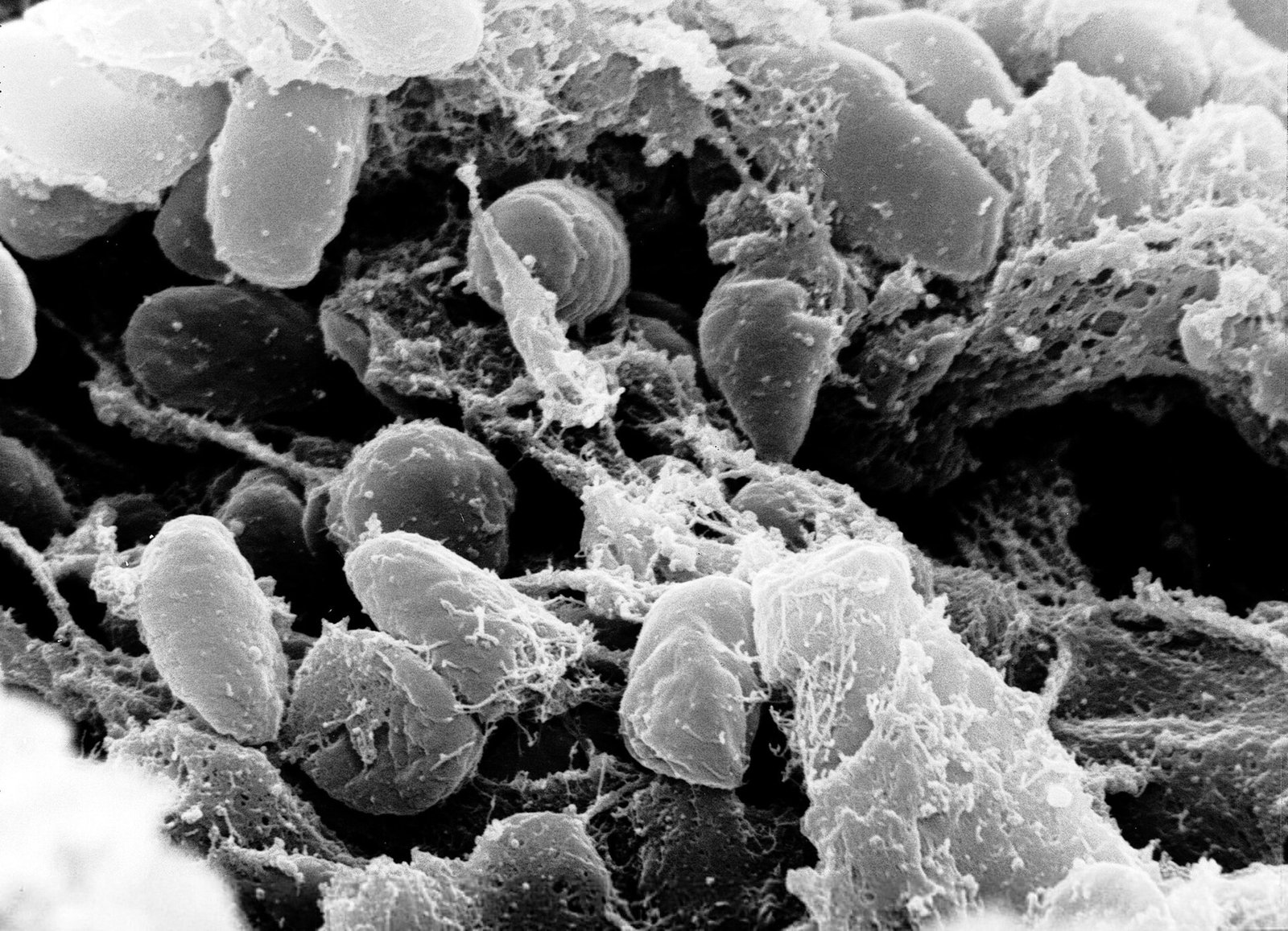
Photo: Rocky Mountain Laboratories, NIAID, NIH / Wikimedia Commons, Public domain
- Nearly 200 people were isolated after one lab worker's death
- Officials who said "plague" quietly edited their posts
- Pneumonic plague can kill within a day, but antibiotics stop it
On 29 September, a 28-year-old woman was admitted to the district hospital in Shelekhov, a small town outside Irkutsk in Siberia. Two days later she was dead.
Her name was Darya Shipilova. She worked as a lab technician at the Irkutsk Anti-Plague Research Institute of Siberia and the Far East, one of the places where Russia studies the bacteria behind the Black Death.
Within hours, Russian outlets were reporting that she had died of pneumonic plague. By the end of the week, nearly 200 people had been isolated, hospitals were under quarantine, and the President of the United States was talking about it from the White House.
What happened in Irkutsk?
The first reports came on the evening of 1 October from local news site Lyudi Baikala, the Telegram channel Mash and the TV network REN TV.
The next day, Shelekhov's mayor Maxim Modin confirmed the hospital's inpatient department was under quarantine. Irkutsk governor Igor Kobzev met Russia's chief sanitary doctor Anna Popova about what officials called a suspected case of a particularly dangerous infectious disease.
Then the story started to change. The head of neighbouring Buryatia, Alexey Tsydenov, had written that she died of plague. He edited it to say she "may have died" of it. REN TV deleted five posts about the plague. The nearby town of Baikalsk removed an advisory telling people not to travel to Shelekhov.
What does Russia officially say?
Russia's health watchdog, Rospotrebnadzor, says Shipilova died of "pneumonia of undetermined origin".
It says tests on her body found no microorganisms linked to her work, and that it found no sign of any accident with pathogens in the lab. Russia has since told the World Health Organization that no plague was found in her or in anyone who had been near her.
The tests on her contacts did turn something up. Two people had COVID-19 and two had a rhinovirus, the virus behind the common cold. Moscow has not said exactly which tests it ran.
A former head of Rospotrebnadzor, Gennady Onishchenko, went further. He said it was "most likely not the plague", and that even if it was, it would not spread.
Kremlin spokesman Dmitry Peskov told Russians to trust official statements rather than "various rumours, various speculations". Governor Kobzev says the situation remains under control.
So why is everyone still worried?
Because what officials did doesn't quite match what they said.
According to Euronews, more than 60 institute staff were sealed inside their building from Friday. Some slept on floors and chairs, with food passed in through a checkpoint. Officers from the FSB, Russia's security service, reportedly escorted the ambulances carrying her contacts.
Three city hospitals in Irkutsk, a children's hospital and a maternity hospital were reported to be under a three-week quarantine. Workers at the Irkutsk Aluminium Plant in Shelekhov were told to wear masks, which the plant's director called a preventive measure.
Then come the rumours. The most widely shared one says Shipilova broke a test tube holding plague bacteria. Another early version claimed she had just come back from Thailand. Neither has been confirmed.
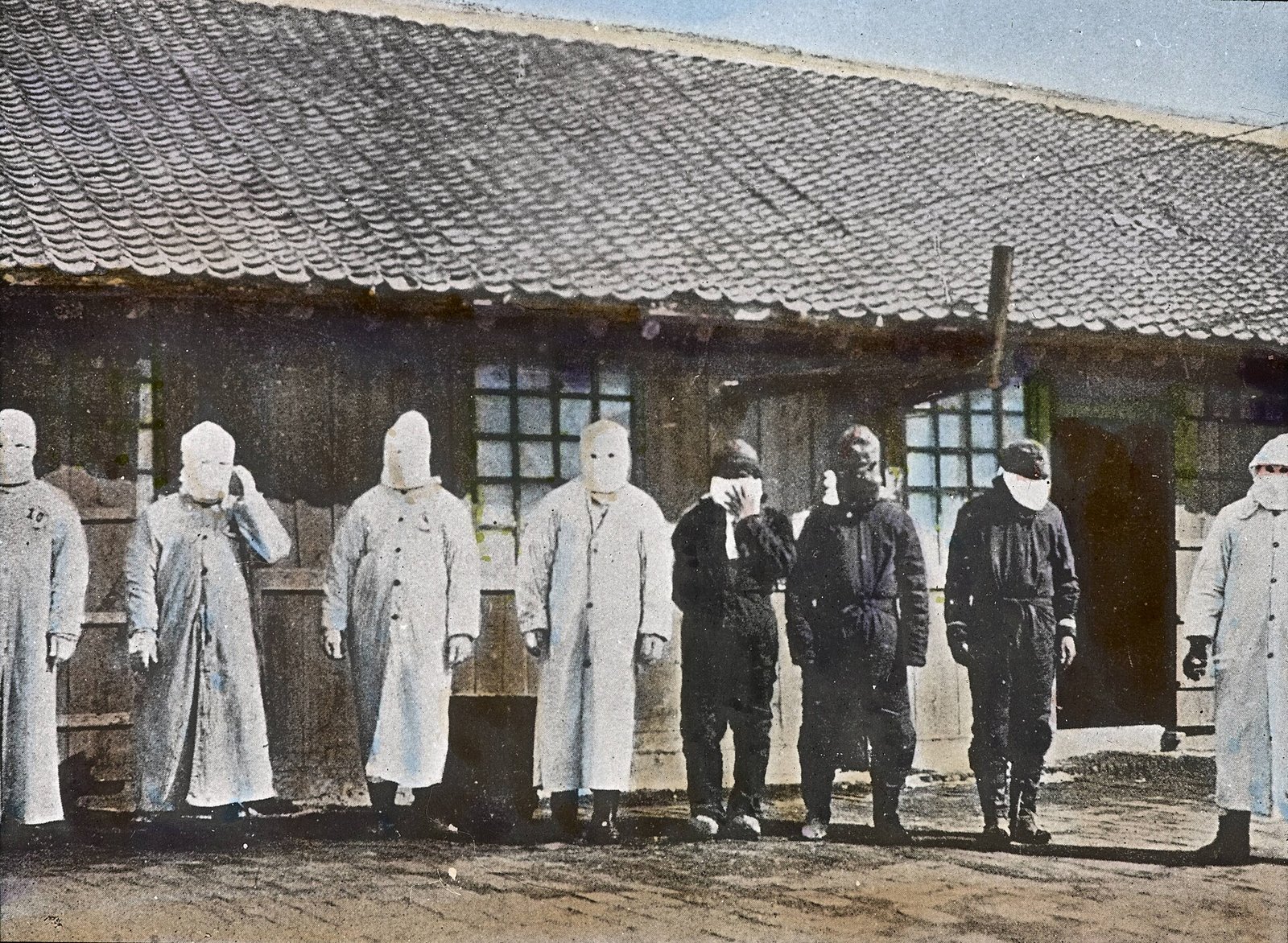
Photo: Unknown / Wikimedia Commons, Public domain
Is there a second victim?
That is the newest and murkiest part of the story, and it is still developing.
On Tuesday, local Russian media claimed a second person had died of plague at Irkutsk district hospital. Russian authorities have not acknowledged any second death, and Rospotrebnadzor denies there is any plague outbreak in the region.
The WHO says it is seeking details from Russia about reports of a second employee with pneumonia of undetermined cause. For now, that second case is a report, not a fact.
Why is Trump getting involved?
On Monday, Trump said the US was ready to help. "I hate to see them having it. Anybody that has that kind of a problem, we're always willing to help," he told reporters.
On Tuesday he said US intelligence was in "deep discussions" about the case and that he had a call with Vladimir Putin scheduled "very soon". He also said of the bacteria, "They're like an army." He promised to share more, "probably tomorrow".
Secretary of State Marco Rubio was blunter. "Maybe there's nothing there. Maybe it's bigger than we thought. We don't know."
Washington has also warned Moscow that it may be breaking the 2005 International Health Regulations, which require countries to tell the WHO about possible international health emergencies, with test results. The US Embassy in Moscow issued a health alert. The CDC says there is no sign of a broader threat to the United States.
How does pneumonic plague spread?
Plague is caused by a bacterium called Yersinia pestis. Most cases are bubonic, passed on by flea bites, and cause painful swollen glands.
Pneumonic plague is the version that reaches the lungs. It is the only form that spreads from person to person, through droplets from coughing. Those droplets don't travel far, roughly three to six feet, so catching it usually means close contact with a sick person.
Symptoms can appear in as little as 24 hours after someone breathes it in.
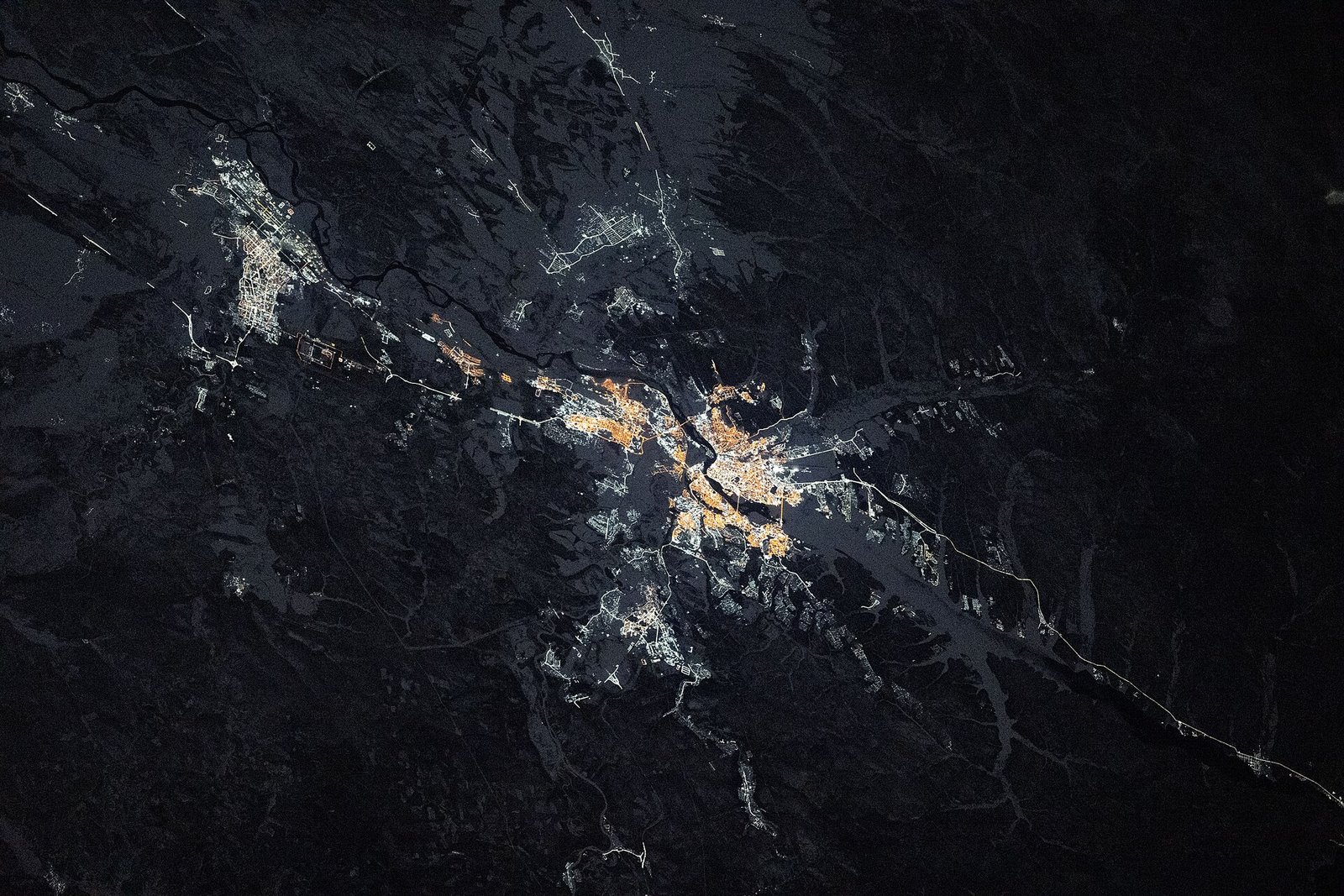
Photo: NASA Johnson Space Center / Wikimedia Commons, Public domain
How deadly is pneumonic plague?
Untreated, it is about as deadly as a disease gets. The WHO says pneumonic plague is invariably fatal unless treated early, and it can kill within 18 to 24 hours of the first symptoms.
Treated, the picture flips. A 10 to 14 day course of common antibiotics cures it, and the WHO says recovery rates are high when treatment starts within a day of symptoms.
Plague has never disappeared. It still lives in wild rodents across Central Asia, Africa, the Americas and Siberia itself, which is exactly why Irkutsk has an anti-plague institute. Between 2019 and 2025 there were roughly 3,847 suspected cases worldwide, and the United States still sees about seven a year.
Has pneumonic plague broken out before?
Yes, and the two most famous outbreaks show both sides of the story.
In 1910 and 1911, pneumonic plague swept through Manchuria in northeast China and killed about 60,000 people. A Cambridge-trained doctor named Wu Lien-teh pushed doctors, nurses and patients into cloth masks, one of the first times masks were used to contain an epidemic.
A century later, Madagascar faced the biggest modern test. Between August and November 2017, the WHO counted 2,348 cases, 1,791 of them pneumonic. There were 202 deaths. That is a fatality rate of 8.6%.
Of the 81 health workers who caught plague in that outbreak, not one died.
Should you be worried about plague from Russia?
It isn't the only outbreak health officials are watching this week. In East Africa, Ebola has just crossed into Kenya after spreading through eastern Congo.
The WHO's answer is clear. It rates the risk outside Russia as very low.
Pneumonic plague needs close, face-to-face contact to spread, it shows itself within days, and ordinary antibiotics cure it. That is why Northeastern University's Samuel Scarpino says even a real outbreak would be readily addressable. The bigger worry is information, and a lab that won't say what happened.
So watch for two things this week. What Putin tells Trump on that call, and whether Russia hands the WHO its test results. Until then, the scariest disease in history has one weakness that never changes. It loses to a cheap antibiotic taken in time.
Sources: Meduza, first report, 2 October 2026 · NBC News · The Jerusalem Post · Euronews · Time · WHO plague fact sheet · WHO, Madagascar 2017
The week's biggest stories, every Monday
One email. The stories everyone will be talking about, before they do.
Free. One email a week. Unsubscribe anytime.Keep reading
 WorldShould you be worried about the plague in Russia?
 WorldInside the Siberian plague lab at the centre of Russia's scare
 WorldMoscow once blamed bad meat for an anthrax leak. Now it says pneumonia